f1

Thursday, September 15, 2016

1968 Plymouth Barracuda 340-S Fastback / Specs and More

The fine 60's muscle car featured in this article is the 1968 Plymouth Barracuda 340-S. This is a true muscle car from the late 1960's and is representative of the muscle car competition of the era. From the mid 1960's to the end of the decade horsepower ruled. Every major automaker had a muscle car to offer.

barracuda formula s
1968 Plymouth Barracuda Formula S
The First Pony Car

History tells us that the first Pony Car to hit the market was an option package for the 1964 Plymouth Valiant. This package was named the Barracuda. The car came out about two weeks before the first Ford Mustang. The date was April 1, 1964, precisely sixteen days before the Mustang.

With that being said, the Ford Mustang was the vehicle receiving the press. Ford went forth with a massive advertising and PR effort for it's new Mustang and the car received attention at the World's Fair in New York. There is no question that Ford's Mustang greatly overshadowed the Plymouth Barracuda and in 1964 it was in more than just PR.

The 1968 Plymouth Barracuda

The 1968 Plymouth Barracuda was among the second generation models. Many would say that the second generation Barracuda was what should have been designed for first generation models.The second generation Plymouth Barracuda was available in fastback, notchback and convertible styles.

The Plymouth Barracuda was designed by John Samsen who also did design work for the first Ford Thunderbirds. It was also Samsen who chose the word “Barracuda” for this new Plymouth line. The Barracuda name prevailed over management’s suggestion of “Panda”. Barracuda was no doubt the best choice for what would become a true muscle car with terrific popularity.

Plymouth Barracudas were produced from the 1964 model year through 1974. The Barracuda Formula  S was available since 1965. Plymouth designers took it easy on ornamentation. There was no excess ornamentation with an inverted trapezoid grille showing deep set vertical bars and stainless steel.

1968 plymouth barracuda formula s
1968 Plymouth Barracuda Formula S Specifications

As mentioned above, the 1968 Formula S as built with either a Commando 340 or the 383 cubic inch engine. The 340 was rated at 275 HP and the 383 cubic inch at 300 HP.

The car’s speedometer had a top speed indicator of 150 MPH. The 1968 model year also saw a 426 Hemi package put into only about 50 Barracudas.

Gearbox on this car is a four speed manual. 

In addition to this the Formula S came with.heavy-duty suspension and wheels, heavy duty shock absorbers and E70-14 Red Streak tires. front fender badges and special hood inserts.  The Barracuda Formula S was known for superior cornering and general handling.

Your 68 Plymouth Barracuda Formula S would have cost you new about $2,700 for the hardtop, about $2,900 for the fastback version and about $3,050 for the convertible.

You may want to check out the additional Muscle Car Journal articles found on the links below...

The 1970 Plymouth Road Runner 440 

A Red Hot 1953 Studebaker Street Rod

plymouth barracuda 340
Plymouth Barracuda Formula S Collector Car 

Every muscle car from  the late 1960's has good collector appeal. One has to remember that 1968 was a few years prior to the mandated federal emission and safety standards regulations.

The name of the game in 1968 was horsepower. It's been said that "Ask a car enthusiast to name a Pony Car and you'll likely hear the name, Mustang. Ask a Mopar guy and you'll hear all about the Plymouth Barracuda".
Ask the average enthusiast to name a pony car and most will inevitably say “Mustang” or “Camaro”. Ask a Mopar guy and you’ll hear the history of the Plymouth Barracuda. - See more at: http://www.rkmotorscharlotte.com/sales/inventory/sold/1968-Plymouth-Barracuda-Formula-S/133319#sthash.v9CbtprK.dpuf


These are popular cars to this day. It doesn't matter what type of muscle car you may be looking for but the 68 Barracuda Formula S will please just about any muscle car enthusiast.

We are seeing fully restored show quality 68 Formula S models with current asking prices north of $50,000. Depending on condition and mileage you'll find Barracudas priced from the teens on up. The Formula S models will be on the high end with fully restored examples in the $35,000 to $40,000 plus range in general.The convertible and fastback models will be in greater demand.

(Photos and article copyright Muscle Car Journal)


Monday, January 18, 2016

1970 Plymouth Road Runner 4 Barrel 440 / Photos, Specs

The Plymouth Road Runner was produced from 1968 – 1980. The Road Runner, which was a B-Body Mopar, was based on the same platform as the Belvedere, Satellite, and GTX. Mopar Muscle cars are icons that changed the automotive industry.

1970 Plymouth Road Runner 440
1970 Plymouth Road Runner
Plymouth Road Runner Model History

Although Plymouth already had a performance car in the GTX which competed against the Pontiac GTO, Chrysler Corporation designers decided to go back to the drawing board and reincarnate the original muscle car concept. The concept for the Road Runner was born.

The Road Runner was based on the cartoon, and came complete with a horn that went beep beep! and an ad campaign featuring Wiley Coyote. It cost Plymouth $50,000 for the rights from Warner Brothers to use the Road Runner name. Depending on the model and year, the steering wheel had a little Road Runner, and the air cleaner had a cartoon with the logo "Coyote Duster." The Superbird put a huge, helmeted Roadrunner onto its massive rear spoiler.

During the first model year for the Road Runner about 44,600 models were produced. The story is that more could have been built in 1968 but parts were in short supply due to overly conservative sales projections. Chrysler executives surprisingly predicted sales of only a few thousand.

plymouth muscle cars
For the following year the model line was increased adding a convertible model and a several additional options. Motor Trend magazine named the Road Runner its 1969 "Car of the Year". The Plymouth Road Runner returned for one more go-around in its original body shell in 1970, although sales fell to 41,484, a victim of skyrocketing insurance premiums for performance cars.

The 1970 Road Runners gained a new grille.  The same year, the Road Runner added the Air Grabber hood, which was remote controlled from the passenger compartment. Press a button, and you have a scoop. Press it again, and you have a normal hood.

Plymouth Road Runner Performance

The success of the Road Runner, unexpected by Chrysler, would far outpace the upscale and lower volume GTX. The Road Runner was targeted to a young performance minded buyer. Top speed on these cars, equipped with either a 440 or 426 Hemi engine, was reputed to be over 150 mph as they arrived at the dealer, and over 180 mph with relatively minor modifications; Chrysler itself set a record of over 200 mph.

chrysler 440 engine
440 cubic inch 4 barrel engine
1970 Plymouth Road Runner Specifications 

Three engines were available for the 1968 through 1970 model years. These were the 383  (standard), 426 and 440 cubic inch V-8. Horsepower ranged from 335 to 390.  The race version of these cars were powered with a 426 cubic inch hemi. 

Our featured 1970 Road Runner is equipped with a 440 cubic inch V-8 with a four barrel carburetor and a four speed manual gearbox. 

The race version of these cars were powered with a 426 hemi.

Standard transmission was a three speed automatic. 

Front brakes were disc and rear drum.

Front suspension were double wishbones with telescopic shocks. Rear suspension live axle, semi-elliptic leaf springs and telescopic shocks.

Dimensions included a wheelbase of 116.0 inches, overall length of 202.7 inches, height of 53.0 inches, and an average weight of about 3,700 lbs.

You may enjoy the Muscle Car Journal articles on the links below...

1995 Mazda Miata V-8 Conversion 

1969 Ford Mustang Boss 302 

1970 Plymouth Road Runner Valuations 

The Plymouth Road Runner is a popular collector car particularly among performance enthusiasts. The Road Runner continued as a Plymouth model and eventually ended up as an option package for the 1978 Volare.

1970 plymouth muscle car
As of this writing the 1970 Plymouth Road Runner is showing a valuation range of about $30,000 to $45,000 for fully restored models with high originality. Convertibles will be priced about $10,000 to $12,000 more.

The highest valued is the 1970 Superbird. This was a highly modified version of the 1970 Road Runner. These models were equipped with a 426 cubic inch Hemi delivering 425 HP. Zero-60 MPH was rated at 5.5 seconds. Current top values from several sources on the Superbird model range from about $90,000 to $130,000 +.

Good books regarding the Plymouth Road Runner models include...1968 Plymouth Road Runner : A History in Photos by Richard Truesdell. Also, Charger, Road Runner and Super Bee by Paul A. Herd and Mike Mueller.

(Article and photos copyright 2016 Muscle Car Journal )


Sunday, January 10, 2016

A 1995 Mazda Miata 5.0 V-8 Conversion / Photos, Specs

The car featured in this article is a 1995 Mazda Miata conversion. The Mazda Miata is not generally looked at as a muscle car but our conversion here sure fits the bill. The Mazda Miata came to the market in 1990 and was a big hit. Some initial buyers who lined up to buy the first of these snazzy little cars actually paid above sticker price. The two seat, lightweight Miata Roadster filled the bill as an affordable sports car.

mazda miata conversion kit
1995 Mazda Miata V-8 Conversion
The first 1990 Miata had a stock 1600cc 4 cylinder engine with a five speed manual or a four speed automatic transmission.

The second generation of the Mazda Miata came out for the 1999 model year. The third generation was seen for 2005 and the fourth comes out for the 2016 model year.

There are not a great many of these Miata V-8 conversions but the ones we have seen look pretty impressive. There are likely a few hundred of these on the road today. What makes our featured 1995 Miata conversion truly unique is it's use of a Ford CCRM (Constant Control Relay Module) computer to operate the fuel pump, fans and A/C. This conversion uses the Ford power steering pump.

The Mazda Miata itself and it's structure works well for a V-8 transplant. The Ford 5.0 V-8 engine in this vehicle meets emission requirements for most states. The Miata Conversion Kits
Miata conversion kits are on the market and most will say that the proper amount of dollars to put aside to perform the conversion well is likely $10,000 and more realistically $12,000.

miata v-8 conversion
Ford 5.0 V-8
While the time involved to perform the conversion might be thought of to be just a few months, six months or so may be more realistic depending on how much time you have to devote to the project. With that being said, If you're extremely proficient with Miatas (like you could drop the motor, transmission, differential, front subframe, and pull the interior/dash / HVAC in a long Saturday) then a month to complete the project is possible.

Monster Miata

 
Our featured Mazda Miata V-8 was built from the kit offered by Monster Miata. As mentioned above, the structure of the Miata is suited very well for a V-8 transplant. According to Monster Miata...We have converted 100+ Monster Miatas in the past 20 years. It is a passion of ours. Having spoken to many gearheads, the consensus is there needs to be a straight-forward way for the average person with a toolbox to do their own V8 conversion . We're proud to say we have achieved this and produced the "easy to understand" V8 conversion kit. 


1995 Mazda Miata Specifications / 5.0 V-8 

 
As mentioned above, the 1995 Mazda Miata featured in this article has a 5.0 Liter Ford V-8 engine. This engine came from a 1995 Ford Mustang rated at 215 HP as it came from the factory.

1995 mazda miata conversion
Custom features include ceramic coasted shorty headers, 3-way cats, wide band bungs, 12 inch resonators and a Hard Dog padded roll bar.

Transmission is a Ford Racing 5 speed.

This car has a custom driveshaft, lightweight wheels from 949 Racing
 
Suspension has custom higher rate springs and eight-way adjustable shocks.

First generation Miata dimensions included a wheelbase of 89.2 inches, an overall length 155.5 inches, a height of 48.4 inches, a width of 65.9 inches and a curb weight of 2.070 lbs.

You may also be interested in the Muscle Car Journal articles on the links below...

The 1949 Anglia Custom Racer

The 1969 Ford Mustang Boss 302

A 1953 Studebaker Street Rod 


ford 5.0 v-8 engine
Miata V-8 conversions on the market as of this writing can be found in a wide price range due mostly to the fact that the conversions themselves differ significantly. We are seeing asking prices of anything from about $17,000 to $30,000.

Those interested in more information regarding Mazda Miata V-8 Conversions might want to take a look at www.v8miata.net. This forum discusses the Miata conversion process and can offer problem solving information. Another site that answers questions and offers Miata conversion kits is..http://www.bossfrog.biz/Miata_V8_Swap.html

A good book regarding Mazda Miata performance includes...Mazda Miata MX-5 Performance Projects by author Keith Tanner. 


(Article and photos copyright 2016 Muscle Car Journal)

Monday, January 4, 2016

1969 Mustang Boss 302 / Specs, Model History, Photos

If you're searching for one of the fastest Ford Mustangs out there, the 1969 Mustang Boss 302 might fit the bill. The 1969 Mustang Boss 302 was a direct result of what Chevrolet was doing with their new Camaro on the race track.

The late 1960's was a time when horsepower was at center stage. The 'Pony Car" era was alive and well. Long hoods and short decks were in style. These were the years just prior to new federal emission and safety standards that would do a lot to rein in horsepower beginning in the early 1970's.

boss 302
1969 Ford Mustang Boss 302
Mustang vs. Camaro 

The Chevrolet Camaro was introduced in 1967 as a direct result of the success of the Ford Mustang which came out in mid 1964. In fact, when the first Chevy Camaro rolled off the assembly line, the specs of the car were almost identical to the Mustang.

Interestingly enough, the 69 Ford Mustang Boss 302 was designed by ex-GM employee Larry Shinoda. This was at the time that Ford Motor Company had a new CEO in Semon "Bunkie" Knudsen, former GM CEO and replacement for the departed Lee Iacocca. Knudsen no doubt had designer Shinoda follow him to Ford.

An interesting side note is that the muscle car designed by Larry Shinoda was originally going to be named the Trans Am, however that name was already taken by GM. The "Boss" name, reported by some, was a reference to the new Ford CEO Bunkie Knudsen. Shinoda it was said always referred to Knudsen as the 'boss". Of course, another story contends that during the 1960's the term boss referred to something superior, number one, the best, bad (as in powerful, dominating, outstanding), etc.


The 1968 Chevy Camaro Z/28 was selling fast. In fact, research showed that the likely Camaro volume for the 1969 model year would probably triple the 68 numbers and come in at about 20,000 units. The Chevy Camaro Z/28 was outperforming just about everything on the road including the Ford Mustang. The Camaro was threatening to dethrone the Mustang as the top "pony car" so something had to change with the Mustang. Ford Motor Company decided that it was due time to react and the result was the 1969 Boss 302. The Ford Mustang Boss 302 was a street legal Trans AM racer that was ready to take on all competition.

1969 mustang boss 302
The Boss 302 and 429

The 1969 model year saw the Boss 302 and Boss 429. The Boss 302 was similar in concept to the Camaro Z/28 package. Both of these models were built for the 1969 and 1970 model years. The Boss 302 produced 290 horsepower, and its 429 cube big brother made 375 horses. The Boss 302, which was created to race Chevrolet's Z/28 Camaro on SCCA Trans-Am road courses. The Trans Am series were becoming increasingly popular. The 429 V-8 was built for NASCAR tracks.

The 69 Boss 302 had a trunk top spoiler, front under bumper lip spoiler and distinctive body side striping. Also side scoops and new panel ornaments.

Total production over the two model years was about 8,500 units for the Boss 302 and about 1,360 for the 429.

ford boss 302 engine
Ford Boss 302 engine
1969 Ford Mustang Boss 302 Specifications

The 69 Boss 302 engine was a Ford 302 cubic inch small block V-8 with a thin wall high nickel casting and with specially designed Cleveland style heads. The engine was developed for the Trans AM racing series but was put into the production Boss 302's for the 60 and 70 model years. This engine put out a rated 290 HP.

Some have stated that the real horsepower with this 302 engine was more like 350. The maximum rated speed for this car was 121 MPH.

The 0-60 was rated at 6.7 seconds and the quarter mile at 15.2 seconds. 

Fuel made it's way to the engine with a Holly 4-barrel carburetor.

Standard gearbox was a 4 speed manual.

Front brakes were power disc with rear being hydraulic drum. 

Stiff competition suspension was used. Quad headlamps were used for the first time in 1969.

The 1969 Ford Mustang was restyled and was larger. For example, the overall length was 4 inches longer than the 68 model. Dimensions for the 1969 Boss 302 included a 108.0 inch wheelbase..an overall length of 183.6 inches..width of 71.3 inches ..height of 49.2 inches and a curb weight of 3,417 lbs.

See additional Muscle Car Journal articles on the links below... 

The 1969 Ford Torino GT 

Modified 1961 Chevy Impala SS 409

1996 Chevy Camaro SS Z/28

Reference materials for this article and excellent books include...Mustang Boss 302: From Racing Legend to Modern Muscle Car by author Donald Farr...Ford Mustang, America's Pony Car by the editors of Consumer Guide Automotive...The Complete Book of Camaro: Every Model Since 1967 by author David Newhardt.

ford muscle cars
Ford Mustang Boss 302 Valuations

Both the Mustang Boss 302 and 429 have plenty of appeal because of factory racer exclusivity. The Boss 302 offers outstanding performance and road handling and is a milestone car.

Finding one today in originality however can be hard. Production was for two model years only and was very limited.

As of this date, 1969 Ford Mustang Boss 302's show valuations in the range of about $40,000 to $90,000. These are for models in very good to immaculate condition. The highest price would be for a vehicle in perfect original condition or perhaps professionally restored in all areas.

(Article and photos copyright 2016 Muscle Car Journal)


Saturday, January 2, 2016

1996 LT1 Supercharged Z/28 Chevy Camaro SS

The 1996 Chevy Camaro SS LT1 featured in this article is among the fourth generation of Camoros. The Chevy Camaro first came out in 1966 as a direct competitor to Ford's Mustang and it was and still is a popular car among performance enthusiasts. Beginning with the 1996 model year, more horsepower was added to the Camaro along with improved handling.

1996 chevy camaro z/28
1996 Chevy Camaro Z/28
A Z/28 convertible and coupe were available for the 96 model year. SLP Engineering provides a 305-horse Z28 SS which is similar to our featured Camaro.

The 96 Camaro had the same 2+2 coupe body style as the original 1966 model. Some of the features of the 1996 Camaro included exhaust manifolds that had tri-layered stainless-steel exhaust gaskets which improve durability and reduce exhaust leaks.

The RS trim level returned for 96 and chrome-aluminum wheels were optional.The standard SS package included an air scoop with a forced air induction system. This raised horsepower to 305 and an optional Performance Exhaust System raised it to 310.

Performance numbers for the 96 Z/28 LT 1 Camaro include 0-60 at 5.2 seconds and the quarter mile at 13.9 seconds. The numbers for the super charged Camaro featured in this article are listed below under specifications.

Owner Reviews

Most owner reviews point out that the 96 Camaro provides a comfortable ride with outstanding performance. Very fast acceleration, excellent top end (140+), smooth handling along with superior braking. Great performance easy to maintain and very reliable are many of the descriptions.  The handling and cornering is exceptional as well. The car is fun to drive and the styling and performance is representative of a true American muscle car. Many claim the Camaro is a real head turner.

While the 1996 Chevy Camaro is a real sports car it might not be the ideal one for some first time owners. Camaro HP is not that of the typical sports car and potential buyers should understand the difference. Although if you're comfortable with the power Camaro delivers then you should find the car to be fantastic.


chevy camaro lt 11996 Chevrolet Camaro LT 1 Specifications

There were three LT1 5.7 Liter 350 Cubic Inch V-8 engines available on the 1996 Chevy Camaro. These were improved from the prior year. One delivered 285 HP, one 305 HP, and the third 310 HP. There was one V-6 engine also available on the 1996 Camaro. This was a 3.8 liter 200 HP V-6.

The 1996 Camaro featured in this article has a 5.7 Liter Super Charged 350 delivering 588 HP. Times 0-60 are 3.2 seconds and the quarter mile at 11.2 seconds. Transmission is a 6 speed manual. Top speed is estimated at 199 MPH.

Transmission choice on the 1996 Camaro was excellent. A 5 speed manual..a six speed manual and a four speed automatic...all with overdrive. The 6 speed manual transmission has an excellent gear ratio.

Brakes are four wheel discs.

Dimensions for the 1996 Chevy Camaro included a 101.1 inch wheelbase, overall length of 193.2 inches, width of 74.1 inches, height of 52.0 inches. Curb weight was rated at 3,440 lbs. 

New car price for the 96 Chevrolet Camaro depended on model and engine with a range of about $19,000 to $23,000. The convertible received the highest price.

Check out the Muscle Car Journal articles on the links below... 

The Powerful 325 HP Morgan Aero 8

The 1969 Ford Torino GT


1996 Chevrolet Camaro Values 

Chevrolet Camaros have always been popular performance cars. Many of these models have the same or better performance than Ford Mustangs. Some might say Corvette performance at a much lower price. Camaros have had excellent performance numbers on the race and drag tracks. Many of course have been highly modified.

chevy camaro muscle cars
Today's asking prices will have a lot to do with originality and of course mileage and condition. There are so many aftermarket parts and accessories available for these Camaros that originality means a lot. By the same token, those in the market for a pure performance vehicle will look primarily at modified super charged models.


As of this date, prices for the 1996 Chevy Camaro likely will range from $8,000 to $12,000 for a running vehicle. Some will be below that range with excessive high mileage. Your Z/28's will generally be priced above base models but a lot will still depend on mileage and condition. Various pricing guides show that the Z28 models in immaculate condition may sell in the $15,000 + range.

(Article and photos copyright Muscle Car Journal)

Friday, December 25, 2015

530 HP of Muscle / 2008 Lamborghini Gallardo Superleggera

If you're looking for muscle, this 2008 Lamborghinin Gallardo Superleggera delivers. The 530 HP Supercar is built in Sant’Agata Bolognese, Italy and is Gallardo's higher priced model. The car is exotic and benefits from creative Italian design. As they say, the looks of this car can kill. On top of that it's powerful and fast. If you're looking for great trunk space this isn't your car. If you're looking for an exciting ride, this is it! The car is fast, sleek, intuitive and reliable.

italian supercar
2008 Lamborghini Gallardo Superleggera
Three Gallardo Models 
 
Three models were built for the Lamborghini Gallardo. These include a base two-door coupe, a Superleggera and a Spyder convertible.

Built For Speed 
 
The 2008 Lamborghini Gallardo Superleggera was constructed with an aluminum body and space frame allowing the car to achieve a better power to weight ratio. These powerful cars contain a 520 hp (some sources say 530 HP) 5.0-liter V-10 along with a six-speed manual transmission (optional is a sequential “E-gear” transmission). Some of the later Gallardo Superleggera models were tuned up to a reported 570 HP. The Gallardo is an all-wheel drive supercar and was built with many standard safety features such as airbags, anti-lock brakes, traction control, and an electronic stability system
Front and rear brakes are ventilated discs.

Dimension for the Lamborghini Gallardo Superleggera is as follows...an overall length of 169.3 inches, a wheelbase of 100.8 inches, a width of 74.8 inches and a height of 45.9 inches. This is a low car. Ground clearance is 5.1 inches. How do you drive over speed bumps? That potential problem is solved by a simple button. The car can lift up and down.

2008 lamborghini gallardo superleggera
Sleek and fast is the word
The Gallardo Superleggera is rated at Zero to 60 MPH at 3.8 seconds. We have seen some reports however of 3.4 seconds. Driving this automobile can be very exciting in as much as the top speed is rated at about 200 MPH. Some might say the top speed is a bit below that and others might say a bit above that. Some who have driven this car say that at 100 MPH + it feels like driving at 60.

Lighter weight is a key factor for the Gallardo Superleggera. Carbon fiber used for the engine cover, the rear diffuser, the underbody cover, the exterior mirrors, the rear spoiler, the side sills keeps the weight down a lot. Despite these factors, the 2008 Superleggera still has a curb weight of 3,434 lbs, not entirely lightweight by some standards but the 530 HP still moves the car along very fast and quick.

Another interesting fact is that the Gallardo Superleggera was known to run an impressive 8.72 seconds in the quarter mile at 169 mph. This is moving quick and fast in just about anybody's opinion. With all of this being said, don't look for fuel economy with this supercar. City fuel economy will be about 10 MPG and highway about 16 MPG.

You may want to check out more Muscle Car Journal articles on the links below...

The Lamborghini Countach / The First Supercar

The 1949 Anglia Custom Racer 

gallardo
The Lamborghini Gallardo Superleggera Collector Car 

These supercars are very much in demand but they obviously don't come cheaply. Lamborghini Gallardo production ended in 2013. Total production of the Gallardo model was 14,022 units. During the ten years of Gallardo production there were about 1,400 units produced annually.  As a side note, almost half of all 30,000 Lamborghinis built since the company was first founded in 1963, are Gallardos.

New car price for the 2008 Lamborghini Gallardo Superleggera was about $217,000. It was the higher priced of the three Gallardo models. Taking a look at asking prices for Gallardo's as of this date we see a range of about $100,000 to $165,000. The Gallardo Superleggera will typically be in the higher end.

(Article and photos copyright Muscle Car Journal)

Saturday, December 19, 2015

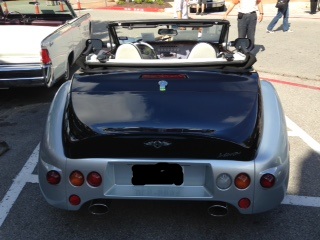
The Powerful 325 HP 2005 Morgan Aero 8

The 2005 Morgan Aero 8 featured in this article is lightweight and powerful. Here you have a terrific looking sports car with a 4.4 L V-8 engine delivering 325 horsepower on a bonded aluminum frame. This model has a rated maximum speed of 160 MPH.

morgan aero 8
Launched in 2001, the new Aero 8 was Morgan's first aluminum bodied road car. The design of this car is familiar but different. The car really is something special. The Morgan Aero 8 is lightweight, powerful and effortlessly stylish.

The Morgan Aero Eight is a real performance car. On this 2,500 lb. automobile is a 32 valve BMW VANOS V-8 engine with a 10.0:1 compression ratio and Bosch fuel injector. This automobile is very conservatively rated at 325 HP and 330 foot pounds of torque

Transmission is a six speed manual.

Brakes are AP Racing with cast iron discs.
The 2005 Morgan Aero 8 has a very sophisticated suspension system. Front suspension is a long cantilever upper arm with lower wishbone and inboard Eibach coil springs over Koni shock absorbers. Rear suspension is made up of independent long transverse wishbones with cantilever mounted,fully floating inboard Eibach coil springs over Koni shock absorbers.

Dimensions for the 2005 Morgan Aero Eight include an overall outside length of 162.0 inches, a wheelbase of 99.4 inches, a width of 69.0 inches, a height of 47.0 inches. All body panels are aluminum.

Rated performance for this Morgan model includes zero to 60 in 4.3 seconds and the quarter mile in 12.3 seconds.

morgan cars
Morgan cars offer a unique blend of charisma, craftsmanship and performance. The Morgan Aero Eight is a sleek aerodynamic styled car. On top of that all of these automobiles are hand built. Every car is expertly hand crafted using three core elements: ash, aluminium and leather.

The Aero 8 is notable for several reasons. Primarily because it is the first new Morgan design since the Morgan Plus 8, which was released in 1968. It is also the first Morgan vehicle with an alloy chassis (the Aero 8 features a CAD-designed Aluminum alloy adhered to a wood frame as opposed to previous Morgan vehicles that were built on a steel chassis).

All of this is from a company that spent it's first 36 years building three wheeled vehicles. The Morgan Motor Company has a long history which is detailed below...

The Morgan Motor Company

The Morgan Motor Company was established in Britain in 1910 by Henry Frederick Stanley Morgan. The company built it’s early reputation with their three wheeled vehicles.Morgan began his career as a railway apprentice, but in 1906, and with the encouragement of his clergyman father, opened a garage in Malvern Link. Three years later he designed a lightweight chassis for a three wheeler to use an air cooled vee-twin engine and employ a tiller for steering.

2005 morgan aero 8
Morgan Motor Company Today

The Morgan Motor Company
today produces automobiles in Malvern Link, United Kingdom. The company assembles all vehicles by hand and the waiting list for ordered cars can be in years.

The Morgan Motor Company built three wheelers from it’s inception in 1910 all the way until 1952. The first Morgan four wheel automobile was the 1936 Morgan 4/4 Series 1. The company through a subsidiary began once again building three wheelers in 2012. The Morgan Motor Company today builds a variety of two and four seat roadsters as well as a coupe and three wheelers.

You may also enjoy our additional articles on the links below...


The 1949 Anglia Custom Racer

The Lamborghini Countach Supercar


2005 Morgan Aero 8 Valuations


powerful sports cars
The first thing to remember about the Morgan Aero 8 is that we're not talking about mass produced vehicles. These cars for the 2005 model year were all hand crafted and sold new for about $125,000.

There are several Morgan car clubs in the U.S. A good listing of these clubs and clubs around the world can be found at www.gomog.com.


Valuations today average in a range of about $60,000 to $80,000 depending of course on condition, mileage, etc. This would be in the average to high retail value range.

Probably the best book out there about the history of the Morgan Car Company is..Morgan: 100 Years: The Official History of the World's Greatest Sports Car by author Charles Morgan.
(Article and photos copyright Muscle Car Journal)

Monday, December 7, 2015

Modified 1961 Chevy Impala SS 409 Muscle Car

The 1961 Chevrolet Impala SS 409 featured in this article is a modified powerhouse of a muscle car. It's a beauty and a legendary car. Here is a car that was made even more famous by the Beach Boy's song and represented Chevrolet's introduction of a full muscle car during the early 1960's.

1961 impala 409
1961Chevy Impala 409
1961 Chevy Impala

Chevy Impalas were popular among a wide range of buyers aside from those looking for performance. The 1960 Chevrolet was the best selling car in the U.S. and was so for ten years. This was Chevy's top of the line model.

During the entire 1961 model year production run, Chevrolet built just under 500,000 Impala models. Out of that number only 450 were built as SS models. Out of the 450 SS models only about 100 were built with 409's. Needless to say, the 1961 Impala SS 409 is a rare automobile.

The 1961 Impala has it's triple taillights and crossed racing flags.The new design which came on the scene with the 1960 Impala was so very much different from those latter 1950's automobiles with their big tail fins and excess chrome. This new Chevy Impala design had uncluttered lines.

To be sure, muscle cars come in many forms and usually with plenty of modifications. The 61 Impala SS 409 featured here is truly a muscle car and has many such modifications. These include...Dual Edelbrock AVS four barrel carburetors...Corvette Rally Wheels...Spin Tech mufflers...Crane Roller Rockers, performance shocks and sway bar and more.

chevy 409 engine
409 engine
The 1961 Impala SS Specifications

There were two engines available if you were a Chevy Impala SS buyer in 1961. A 348 cubic inch four barrel V-8 which could deliver 305 HP and a tri-carburetor set up putting out a rated 350 HP. These comprised one engine offering. The other choice you would have had was a 409. Both of these engines had a very respectable record on the racing circuit. As the 409 later evolved it would eventually deliver a big 425 HP.

The Chevy 409 was essentially a 348 cubic inch engine with a bigger displacement. The engine had 409 ft-lbs of torque. The 409 had a wider cam shaft and forged aluminum pistons. Thicker cylinder sidewalls. This and a four barrel carburetor had this engine delivering 360 HP and reportedly could do the quarter mile in about 15 seconds. Zero to 60 was rated at 7.8 seconds although some have the car rated at about 6.8 seconds. All of this Impala SS powerful performance was in what really was considered a full size family car. One thing is apparent. From the beginning of the 1950's to the end of the decade, engine sizes just about doubled.

409 muscle car
Gearbox for the SS 409 was a floor mounted four speed manual.

The 61 Impala SS 409 had a wheelbase of 119.0 inches, an overall length of 209.3 inches, width of 78.4 inches, a height of 55.5 inches and a weight of about 3,600 lbs.

Suspension for the car is heavy duty but still rides quite smooth with easy steering. 

The Chevrolet Impala SS 409 came out of the factory with "Positraction" limited-slip differential, a DeLuxe air conditioner, an AM radio, tinted glass, two-speed wipers with washers, and a deluxe steering wheel. 

New car price for the Impala SS 409 was about $3,900. As a side note, Chevrolet also built a station wagon named the Nomad which was available in both a six cylinder and eight cylinder version.

See our additional featured muscle cars on the links below...

A Red Hot 1953 Studebaker Street Rod 

The 1968 Plymouth Barracuda Formula S 

The 1967 Chevy Nova II SS 

One good book regarding the Chevy 409 is titled... How to Rebuild and Modify Chevy 348 / 409 Engines. 

chevy 409The Chevrolet Impala SS 409 Collector Car

If you happen to own an original 1961 Chevrolet Impala SS 409 you have a rare and very popular collector car, especially among performance enthusiasts. There were only about 100 of these originals produced so the numbers are on your side.

As of this writing, you'll likely see prices in the $50,000 to $70,000 plus range for any original Impala 409 available for sale. The convertible model when available will be priced on the high end because out of these very few 409's built, even less were convertibles.

(Article and photos copyright Auto Museum Online) 


Saturday, October 31, 2015

A Red Hot 1953 Studebaker Street Rod

The 1953 Studebaker Champion featured in this article is one great looking Street Rod. The car is painted in GTO Red.

1953 studebaker
1953 Studebaker Champion Street Rod
Brief History of the Studebaker Champion

The Studebaker Champion had a relatively long history. It was considered Studebaker's economy model. The model first came on the market in 1938. It was produced into the 1942 model year but it's production, like every other American civilian automobile, was halted in February 1942 due to the U.S. entering World War Two. The next Studebaker Champion to see was the 1946 model. That car was essentially a 1942 model with some minor changes.

Credit for the new post war model Studebaker Champion goes to the legendary Virgil Exner and the Raymond Lowry Studios. Virgil Exner was a very well known automobile designer who worked for several companies, most notably for Chrysler and Studebaker. Raymond Lowry Studios performed many types of design wwork including stations and train cars for the Pennsylvania Railroad. The 1953 Studebaker design was futuristic, and gave a heads up to the rest of the American car industry that it was time to catch up. Studebaker advertised their 53 Commander as "The new American car with the European look". Also, "Continental charm of Europe's most distinguished cars".


The year 1953 was the beginning of the fourth generation Studebaker Champions. The 1953 models were introduced with an entirely different design. The two-door coupe was named the “Starlight.” while the more expensive hardtop coupe was named the “Starliner.” The Studebaker Champion was produced from the 1938 model year through 1958. It's replacement in 1959 was the Studebaker Lark which assumed the role as Studebaker’s economy offering. One thing for sure is that the Studebaker Lark would never be mistaken for the aerodynamic 53 Commander.

studebaker street rod
Small block Chevy 350 engine
Our 1953 Studebaker Champion Street Rod Specifications

This particular street rod is equipped with a small block Chevy 350 cubic inch  ZZ4 engine. This was the original high-performance 350 Chevy crate engine. The ZZ4 350 comes with a forged steel crankshaft, hypereutectic pistons, hydraulic roller camshaft and lifters, and aluminum cylinder heads. The ZZ4's Corvette inspired high-performance heads feature high velocity intake runners and D-shaped exhaust ports to allow efficient and unobstructed flow through the engine. All of this adds up to a very impressive 355 HP. 

As a side note, the standard engine for the 1953 Studebaker Commander was a 169 cubic inch inline six that was rated at 85 HP. 

In addition to this, our featured 1953 Studebaker Champion has a 750 Holly carburetor and a Turbo Hydra-Matic 700R-4 transmission. This transmission was designed to be used behind small block Chevy V-8's.

The car has front disc brakes and 9 inch large rear drum brakes. Add to this Sanders headers and a 2 1/2 inch Flow Master mufflers. 

See our additional muscle car articles on the links below...

The 1968 Plymouth Barracuda Formula S 

The 1967 Chevy Nova II SS 

A Beauty of a 1967 Chevy Camaro SS 

Studebaker Street Rods

Performance car enthusiasts know that there is not a shortage of Studebaker Street Rods and these include pickups. In regards to the 1953 Studebaker Champion, the radical restyling of this car and the aerodynamic improvement was not lost on performance enthusiasts. It is for these reasons that the 53 Studebaker Commander is a popular Street Rod. We've even come across a great looking 53 Commander with a Chrysler Hemi engine delivering a whopping 725 horsepower and a claimed top speed of 200 MPH. 

A few good resources for hot rods and street rods include...Hot Rods of the 1950's by Andy Southard and Hot Rodder: From Lakes to Street by Albert Drake
(Article and photos copyright 2015 Auto Museum Online)

Thursday, September 17, 2015

The 1968 Plymouth Barracuda Formula S Muscle Car

The car featured in this article is a nicely restored 1968 Plymouth Barracuda Formula S. The Formula S package truly placed the model in late 1960's muscle car territory as well as perhaps being the first Pony Car to hit the market. Plymouth Barracudas were produced from the 1964 model year through 1974.

1968 plymouth barracuda
The person behind the design of the first Plymouth Barracuda was John Samsen. Ironically, Samsen had a hand in designing the very first two-seater Ford Thunderbird. In a way, those first two seat Thunderbirds were the catalyst for the Pony Car era of the 60's.

When it came time to name this car, Plymouth management came up with the name "Panda". This did not sit well with designers and the name "Barracuda", which came from John Samsen, won the day. Somehow the name Barracuda seems more in line with what would become a popular late 60's muscle car. 

The Plymouth Barracuda Pony Car

A Pony Car was a stylish, affordable and compact automobile which history tells us came into being with the first 64 Ford Mustang. These were cars of the 60's noted for their long hoods and short decks. They were primarily marketed to the youth segment or to those who desired to drive a youthful looking automobile. A funny thing happened on the way to the Mustang Pony Car and that was the introduction of the Plymouth Barracuda. The Plymouth Barracuda actually came on the market about two weeks before the Mustang and was a Pony Car. In 1964 the Plymouth Barracuda was not it's own model but was an option package for the Plymouth Valiant.

While the first Barracuda was really an optioned Valiant, three years later in 1967 the Plymouth Barracuda looked nothing similar to the Valiant. The only similarities would have been in the mechanics. Three years after that in 1970 the connection with the Plymouth Valiant ended entirely.

barracuda formula s
The Plymouth Barracuda Formula S

The Plymouth Barracuda Formula S was an entirely different offering than the base Barracuda. The base 1964 Plymouth Valiant base Barracuda option came with a 225 cubic inch slant six engine rated at 145 HP. Buyers could also opt for a 273 cubic inch that delivered 180 HP.

The Plymouth Barracuda Formula S debuted with the 1965 model. The big news here was the introduction of the Commando V-8. This was a four barrel 273 V8 rated at 235 hp. The public seemed to approve of the Barracuda changes from the previous year since 1965 sales nearly tripled.

Our featured 1968 model was a part of the second generation Barracudas. These second generation models were available in fastback, notchback and convertible styles.

plymouth barracuda
The 1968 Plymouth Barracuda Formula S

The Formula S package for 1968 included engines of either a Commando 340 or the 383 cubic inch design. In addition to this the Formula S came with.heavy-duty suspension and wheels, heavy duty shock absorbers and E70-14 Red Streak tires. front fender badges and special hood inserts.  The Barracuda Formula S was known for superior cornering and general handling.

Your 68 Plymouth Barracuda Formula S would have cost you new about $2,700 for the hardtop, about $2,900 for the fastback version and about $3,050 for the convertible.

Total 1968 Plymouth Barracuda production was 46,018 units. Out of that number there were a total of 28,775 V-8 models. Total Formula S 340′s were 3,917 units and total Formula S 383′s were 1,270 units. These production numbers are estimates only. There are some variations depending on source.

1968 Plymouth Barracuda Formula S Specifications 

The 68 Formula S was built with either a Commando 340 or the 383 cubic inch engine. This particular model featured has a 340. The 340 was rated at 275 HP and the 383 cubic inch at 300 HP.  The 1968 Formula S also saw a 426 Hemi package put into only about 50 Barracudas.

plymouth muscle cars
The Formula S transmissions were an A-833 four-speed or a 727 TorqueFlite automatic.

Dimensions for the 68 Barracuda Formula S included a wheelbase of 108.0 inches, an overall length of 192.8 inches, a width of 71.6 inches and a height of 52.8 inches. Weight was 3,340 lbs.

See the additional Muscle Car Journal articles on the links below...


The 1968 Chevy Chevelle SS Turbo 489 

The 1969 Ford Torino GT

Reference material and excellent books regarding the Plymouth Barracuda include…Barracuda Model Portfolio 1964-1974 by author R.M. Clarke. Also Challenger and Cuda, Mopar’s E-Body Muscle Cars by Robert Genat and Dodge Challenger and Plymouth Barracuda by author David Newhardt.

(Article and photos copyright 2015 Muscle Car Journal)


Friday, August 14, 2015

A Powerful 1967 Chevy Nova II SS with a 454 / Photos and Specs


67 chevy nova
1967 Chevy Nova II SS
Right out of the 60's muscle car era is this fine looking 1967 Chevy Nova II SS with a 454 cubic inch engine. The 1967 model Nova is from the second generation which ran from 1966 through the 1967 model year.

The Chevrolet Nova had been known as an economical and compact car. With that being said, put the right engine in this vehicle and you had yourself a true muscle car. The rise to muscle car fame by the Nova II was not something deliberately planned but the car nevertheless did achieve that status. 

The 67 Chevy Nova II SS was a relatively light car with a lot of power. For 1967 the top of the line engine for the Nova Super Sport was a 327 cubic inch V-8 delivering 275 HP. There were a total of five generations of the Chevy Nova running from 1963 through 1979 and then from 1985 through the 1988 model year.

Engine options were plenty, five in all. You also had the choice of three transmissions. Engines included a 194 cu inch inline six, 230 cu inch inline six, 250 cubic inch inline six, 283 cu inch V-8 and a 327 cubic inch V8.


1967 chevy nova SSThe original Chevy II's were of unibody construction. The first Nova offered either a four or six cylinder inline engine.

Birth of the Chevy Nova II

A bit of Chevy Nova history to start with. The Chevy Nova II was designed to compete directly with Ford's compact Falcon model and with Chrysler's Valiant. It just so happened that back in 1962 the compact car wars were heating up in Detroit. It's true that Chevrolet already had the compact Corvair in place but the rear mounted engine technology was not enough to compete against rear wheel drive compacts. Therefore, the Chevy Nova, not a spinoff design from any other GM model, was born. The first Chevy Nova came off the assembly line in 1961 at GM's Willow Run, Michigan plant located just west of Detroit. The first Chevy Nova was a 1962 model. Later in Nova's production run the car would be built at three other plants outside of Michigan.

These first Nova's had engines specifically built for these models.

Chevy Nova II 1967 Styling

The 67 Nova received a new grille but other than that there were relatively little changes from the 66 model. Interior changes from year to year were pretty much just pattern differences. The 67 Chevy Nova II possessed crisp clean lines as did the 66. It should be noted that the 1966 Nova did receive a complete redesign from 1965 including a new dashboard.


alt="chevrolet nova ss"
chevy nova dashboard
67 Nova SS dashboard
The Super Sport had restyled bucket seats, door to door carpeting and all vinyl interiors.

Some safety changes/additions were seen for 1967. The Nova II was given an energy absorbing steering column along with a safety steering wheel. Also padded armrests and sunvisors along with knobs on the instrument panel being recessed. 

The 454 Small Block V-8 

The 1967 Chevy Nova II SS featured in this article has a 454 cubic inch small block V-8. Horsepower for this engine runs between 575 and 600. The bore is 4.250 inch and that's extremely large for a small block. This bore and stroke (4.000) combination is the same as the first 454 Chevy big-block.

1967 Chevy Nova II Super Sport Specifications 

As mentioned above there was a total of five engines available for the Nova with the 327 cubic inch being the top of the line for the Super Sport. This was also true for the 66 model. In 1967 the powerful L-79 engine option was dropped from the Nova SS so as not to take away sales from the new Camaro. Our featured Nova SS in this article has a 454 cubic inch V-8.


The three transmissions available included a three and four speed manual and a two speed Powerglide automatic.

Brakes were four wheel drum with disc brakes becoming an option in 67.

The 67 Chevy Nova had dimensions including a 110.0 inch wheelbase, a 183.0 inch overall length, a 71.3 inch width and a 55.1 inch height. The car's curb weight came in at 2,690 lbs.

For the 1967 model year there was a total Chevy Nova production of 106,400 vehicles. Out of that number 10,065 were Super Sport models. Most of these, about 80 percent, were fitted with small block engines.

See more of our articles on the links below... 

The 1969 Ford Torino GT Muscle Car

The First Supercar / The Lamborghini Countach 

The Turbo T-Bucket with a Blown 355

alt="454 v-8 engine"
454 cubic inch engine
This 67 Nova SS's 454
The 1967 Chevy Nova II SS Collector Car


Both the 1966 and 1967 Chevy Nova II's are very popular collector cars.

As of this writing, you may find the restored 1967 Chevy Nova SS valued in the $30,000 to $50,000 price range. Originality of course will skew the price tag to the high side. Some good looking modified models have been seen in the $20,000 plus range.

(Article and photos copyright 2015 Muscle Car Journal)

Friday, May 22, 2015

Muscle Cars of the 1960's / Where Did They Go?

A Muscle Car Journal Viewpoint...

All About Horsepower

The name of the game during the 1960's was horsepower. During the early 1960's Carroll Shelby made news by putting a Ford V-8 on an imported Cobra modified frame. Shelby also did groundbreaking work with the Ford Mustang and it's modified Shelby Ford engines (750 HP and more).

You might say that the decade of the 1960's is best remembered as the Muscle Car years and also the Pony Car years. We all remember or have heard of the fabulous muscle cars of the 1960's. Some will say that the muscle car competition was kicked off by Ford's Mustang. Chevrolet followed suit a few years later with the Camaro whose specifications almost matched the Mustang entirely.

1968 olds
68 Olds 442
Interestingly enough, the muscle car competition between America's automakers included all types of body styles. In some cases , sports cars, trucks, even family cars had the biggest V-8 under their collective hoods. Cubic inches were king and rated power was through the roof. This engine power race lasted for years and then something happened. Something significant occurred. Horsepower began dropping. The story follows of why this happened.

All About SAE Measurements

The 1960's Muscle Car era was all about horsepower and to help sell the cars horsepower was highlighted. The way horsepower was measured contributed to some very high numbers. Horsepower was measured by Gross SAE. This meant that the power was measured at the flywheel with no power-hungry accessories attached. Only the bare essentials were used. Gross SAE horsepower had pushed the listed power up and for automakers and auto dealers this helped sell cars.


Beginning in 1972 SAE Net measurements were phased in. Power was still measured at the flywheel but all the accessories were installed including the full exhaust system, emission controls, all pumps and the alternator. SAE Net . As a result horsepower power ratings dropped. The drop was not standard because every car presented a different situation. Converting gross SAE to net SAE couldn't be reliably done.

If this wasn't bad enough to the horsepower hungry crowd, in 1973 the federal government tightened emission standards and horsepower dropped yet again.

69 dodge charger
69 Dodge Charger

The Insurance Industry Enters the Fray

When insurance companies started to take notice of these very high horsepower ratings, guess what, rates increased. Young drivers under the age of 25 who drove a Pontiac GTO muscle car in 1967 might pay about $700. Remember, those were in 1967 dollars and that type of rate back then was if the driver had a clean driving record. For a good many young drivers that was a game changer.


The Muscle Car Era Peaked in 1970

The year 1970 can safely be used as the year muscle cars reached their peak. After that it was downhill ride. The 1971 models started looking a bit different. Some may say a bit less sleek and a bit more like a family car. In 1972 the engines were being tuned down and the larger engines were becoming fewer and fewer. Even worse, by the mid 1970's muscle cars were not even considered cool.

1965 shelby gt-40
65 Shelby GT-40
The oil crisis and higher gas prices of the early 1970's seemed to seal the muscle cars fate. Remember the long lines at service stations. This was the final blow. Gas guzzlers were considered by many to be irresponsible, expensive and unwanted and it didn’t matter how much fun they were. The general discussion at this time was fuel efficiency and reducing smog. The government and insurance companies plus higher gas prices all combined to put an end to the muscle cars of the 60’s and early 70’s.
 
Engine Horsepower Comparison


What kind of horsepower were the V-8's delivering? The most powerful 351 cubic inch put out 300 hp in 1970 and the 427 cubic inch came through with an astounding 390 hp in 1968. By the year 1973 the most powerful Mustang had a 351 V-8 delivering a mere 156 HP. This was about half of what it had in 1970, and only one horsepower more than the 200 cubic inch six of 1970. The big three had to lower compression and meet federal standards. By the end of the 1970's car's had many smog items attached to them.

1969 ford torino gt
69 Ford Torino GT
The Safety Factor

The safety factor may not have dealt a crushing blow to this era of muscle cars but there was some concern. The federal government did begin to take notice. High speed crashes were publicized. Some of these car crashes were attributed to young inexperienced drivers getting behind the wheel of a 400 horsepower machine. While some states had seat belt laws dating back to the early 1960's, the federal mandate did not take effect until the 1968 model year.


Muscle Car Resurgence

Muscle cars have again become cool. All you have to do is attend an auto show or swap meet and you'll likely see some beautifully restored muscle cars from the 1960's. You'll likely see highly modified versions with original engines being a bit more an exception than the rule.

After the year 2000 some of the big automakers began to bring out some of their big hits from the 60's like the Dodge Charger that came out in 2005. Chrysler had already brought out their new 300C model with it's hemi V-8 and horsepower that ranged from 340 to 425. The Ford Mustang stayed in production from 1964 to this very day. This was the iconic automobile that ushered in the Pony Car era of cars with long hoods and small decks. They still compete in a variety of racing events.

(Article and photos copyright 2015 Muscle Car Journal)